
Key takeaway
Therapy can help when work stress abroad follows you home, disrupts sleep, damages confidence or affects the people you love. You do not need to wait for burnout. Starting earlier can help you regain clarity, protect your relationships and make decisions while you still have energy.
You Are Still Functioning, but at What Cost?
You attend the meetings, meet deadlines and keep saying that everything is fine.
Then work follows you home. You replay one comment, check messages during dinner and wake up preparing for problems that have not happened. By the weekend, you are recovering rather than enjoying your life abroad.
That is why functioning is not the same as functioning well.
Critical reminder: You do not need to collapse before your struggle deserves support.
Work can feel especially high-stakes abroad because your income, housing or residency may depend on one job. Our guide to working abroad and mental health explains this combined pressure.
What Can Happen When Work Stress Keeps Growing?
Work stress rarely takes over your life in one dramatic moment. It expands through small sacrifices:
- You sleep less so you can prepare more.
- You withdraw because conversation feels like another task.
- You become impatient at home.
- You work longer because concentration is getting worse.
- You make decisions from fear instead of clarity.
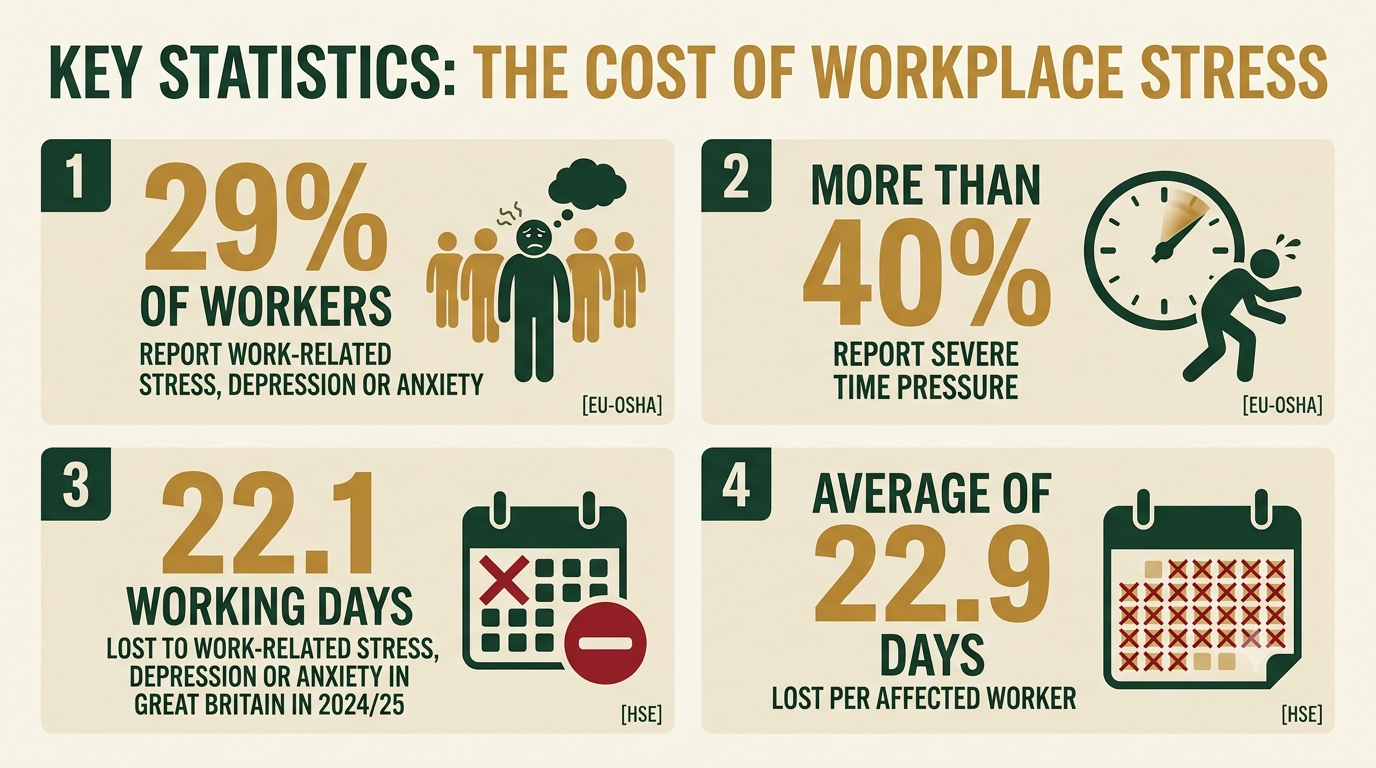
EU-OSHA's 2025 survey found 29% of workers reported stress, depression or anxiety, while more than 40% reported severe time pressure.
In Great Britain, work-related stress, depression or anxiety caused 22.1 million lost working days in 2024/25. Affected workers took an average of 22.9 days off.
The real cost is not only time away from work. It can be the confidence, closeness and decision-making ability you lose before you finally stop.
Signs Therapy May Be Worth Considering Now
Therapy may be worth exploring when several of these patterns are persistent or worsening:
- You cannot mentally leave work.
- Your sleep is repeatedly disrupted.
- Every email or meeting feels threatening.
- You replay conversations for hours.
- You need the weekend to feel functional.
- Your confidence keeps falling despite good performance.
- You are becoming irritable or unavailable at home.
- You keep thinking about quitting but cannot decide clearly.
- Your job or visa situation makes you feel trapped.
- Rest helps briefly, then the cycle returns.
Look at duration, intensity and impact. Ask yourself:
- How long has this been happening?
- Is it getting worse?
- What is it costing my health and relationships?
- Am I still making choices, or only reacting?
When constant worry and rumination are central, read about work anxiety abroad.
Why Waiting for Burnout Can Cost You More
The World Health Organization describes burnout through exhaustion, growing cynicism toward work and reduced professional effectiveness.
Once exhaustion becomes severe, even useful actions can feel impossible:
- asking for help;
- updating your CV;
- setting a boundary;
- speaking honestly with your partner;
- making a realistic exit plan.
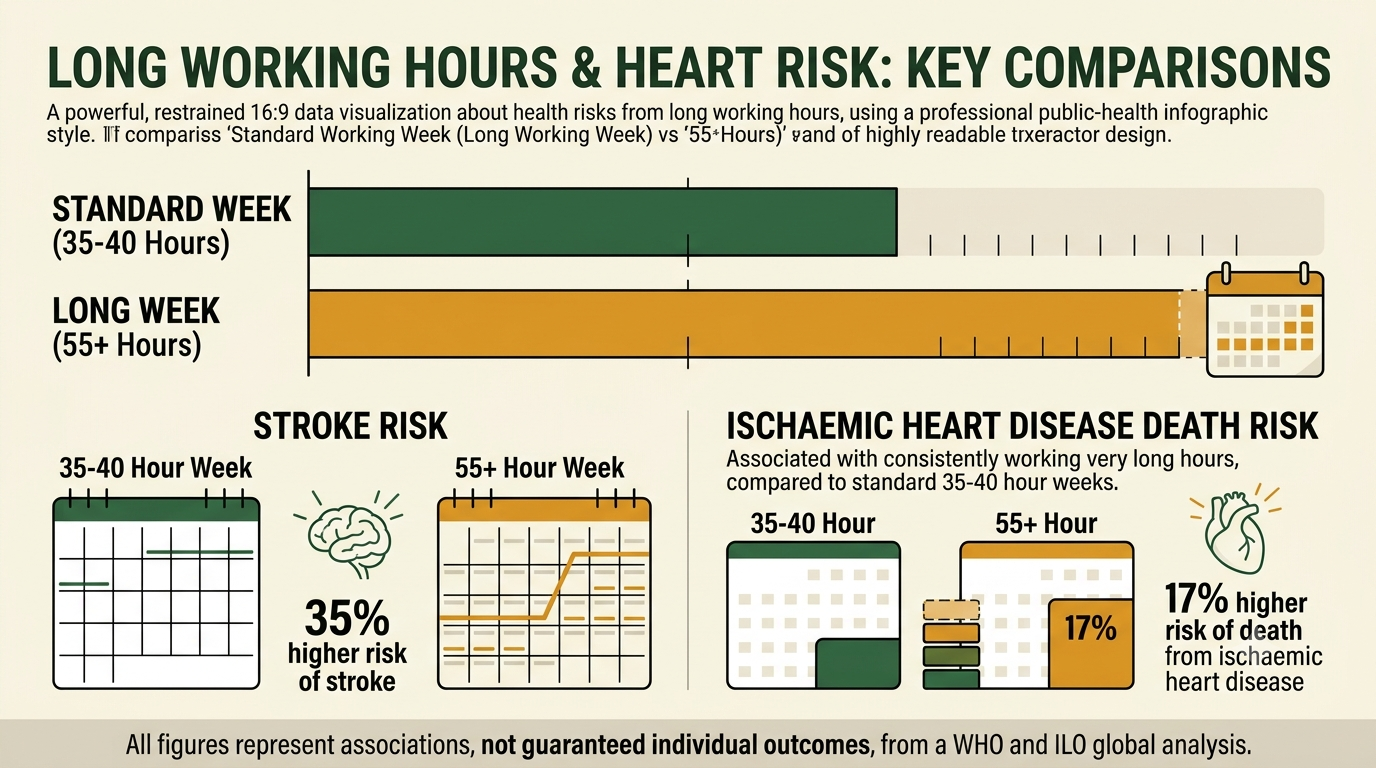
A joint WHO and ILO analysis found that working 55 hours or more per week was associated with an estimated 35% higher risk of stroke and a 17% higher risk of dying from ischaemic heart disease compared with working 35 to 40 hours.
Every demanding period will not cause illness, but repeatedly sacrificing recovery is not harmless ambition.
Do not wait until survival mode removes the options you still have today.
If exhaustion, numbness and cynicism feel familiar, read our guide to expat burnout.
What Can Therapy Actually Help You Change?
Therapy can help you identify the pattern keeping work active in your mind and practise responses that protect your functioning.
It may help you:
- interrupt rumination after work;
- reduce perfectionism and excessive preparation;
- separate language confidence from professional competence;
- recognise anxious predictions before treating them as facts;
- build realistic boundaries;
- communicate before stress becomes resentment;
- rebuild sleep and recovery habits;
- distinguish anxiety from an unhealthy workplace;
- make career decisions with greater clarity;
- manage fear when your visa depends on your job.
A 2023 Cochrane review covering 117 studies and 11,119 healthcare workers found that interventions focused on thoughts, feelings and behaviour may reduce occupational stress, with some effects lasting up to a year. The evidence was not expat-specific, but it supports one point: stress patterns can change when you work on them deliberately.
Therapy Cannot Fix the Wrong Employer, but It Can Restore Clarity
Therapy cannot:
- change immigration law;
- guarantee job security;
- remove an impossible workload;
- fix discrimination;
- replace legal or employment advice.
It can help you answer:
- What is happening inside me?
- What is happening in this workplace?
- What practical action is possible now?
Sometimes clarity means staying with better boundaries. Sometimes it means preparing to leave. Therapy can help you reach that conclusion without letting panic decide.
Work Stress Can Put Your Relationship Under Pressure
Work stress can appear at home through:
- shorter conversations;
- less affection;
- constant phone checking;
- cancelled plans;
- arguments about small things;
- emotional withdrawal.
Research has linked heavier workloads with later reductions in a partner's marital satisfaction. Work stress does not automatically destroy relationships, but it rarely stays inside one person.
Our guide to expat couples and relationship challenges abroad explains why relocation pressure can make this spillover harder to manage.
Getting support is not only something you do for yourself. It can protect the people living beside your stress.
Therapy Is Not Only for the Moment You Break
Most people exercise because maintaining physical strength is easier than rebuilding it after decline. Your mental fitness deserves the same respect.
This does not mean everyone needs weekly therapy forever. Some people benefit from weekly sessions during an intense period. Others need a shorter course or a different rhythm.
Therapy can be preventive, not only a final response to crisis.
A session may cost far less than prolonged sick leave, an impulsive resignation or a relationship damaged by untreated stress. Therapy is not a guaranteed financial return. It is an investment in the person carrying your career, family and future abroad.
What Could Change After Starting Therapy?

Your job may remain demanding, but you may begin to:
- notice triggers before they take over the evening;
- stop treating every mistake as a threat;
- recover without feeling guilty;
- communicate more honestly at home;
- separate personal patterns from workplace problems;
- make decisions from clarity rather than exhaustion.
Therapy may not remove every pressure, but it can change how much of your life that pressure is allowed to occupy.
How Expathy Makes the First Step Easier
Expathy quickly matches expats with licensed psychologists who speak their native language.
Many Expathy psychologists are expats themselves, so they understand your cultural background and the challenges of building a future abroad.
You do not need to spend your first sessions explaining why one workplace problem can threaten your confidence, income, residency and family stability at the same time.
Final Thought
You moved countries, rebuilt routines and worked hard to create this life.
Protecting your mental health is not weakness. It protects the person responsible for carrying everything else.
Do not wait until exhaustion makes every option look impossible. Seek support while you still have the energy to change direction.
Sources and Further Reading
- OSH Pulse 2025 workplace mental-health findings, EU-OSHA
- Working days lost in Great Britain, Health and Safety Executive
- Long working hours and health risks, World Health Organization and International Labour Organization
- Individual-level interventions for reducing occupational stress, Cochrane
- Workload and marital satisfaction over time, Journal of Family Psychology
Frequently Asked Questions About Therapy for Work Stress Abroad
Can therapy help with work stress abroad?
Yes. Therapy can reduce rumination, clarify triggers, rebuild boundaries and support better decisions. It cannot remove visa or workplace problems, but it can help you respond more clearly.
How do I know if my work stress is serious enough for therapy?
Consider therapy when stress persists, sleep is affected, you cannot switch off or relationships are suffering. You do not need a diagnosis. Impact on daily life matters more than whether you still complete your work.
Should I wait until I have burnout?
No. Therapy may be most useful before exhaustion reduces your ability to think and make changes. Early support can interrupt overworking, perfectionism and poor recovery.
Can therapy help if my workplace is unhealthy?
Yes, but therapy should not teach you to tolerate mistreatment. It can reduce self-blame, clarify options and support practical planning. Legal or immigration questions may require qualified advice.
How often should I attend therapy for work stress?
There is no universal schedule. Some people benefit from weekly sessions during intense periods, while others need less frequent support. Follow your needs and the psychologist's recommendation.
Can therapy help me decide whether to quit my job abroad?
Therapy cannot decide for you. It can help separate temporary stress from an unsustainable situation and support a plan based on evidence rather than panic.
Is online therapy effective for work stress?
Online therapy provides support without travel and can make native-language care easier to access abroad. Results depend on the approach, psychologist and your participation.
Need support? We're here.
Book a free 15-min consultation with our expat-specialized therapists.